Grounding Techniques For Anxiety That Work (and Why) From an Anxiety Therapist in College Park, MD

Grounding techniques can bring balance to an anxious nervous system.
If you've ever been told to "just ground yourself" in the middle of an anxiety spiral, you may have had one of two reactions: either it helped, which felt almost suspiciously simple, or it didn't, which left you wondering what you were missing. Grounding techniques for anxiety are everywhere right now: on Instagram, in wellness apps, in the well-meaning advice of friends. But they're often handed over without any explanation of why they work, which means a lot of people try them once, decide they're not for them, and move on.
As an anxiety counselor in College Park, MD, here's what I want you to know: grounding isn't a gimmick. When it's practiced with some understanding of what's actually happening in the body, it is one of the most useful tools available for managing anxiety in real time. It works at the level of the nervous system, not just the thinking mind, and that's exactly why it can reach places that reasoning and logic can't.
This is the third post in my series on somatic therapy and body-based approaches to anxiety. In the first two posts, we covered what somatic therapy is and how the nervous system gets stuck in high alert. This post is where we start getting practical. We'll look at what grounding actually does, several techniques worth knowing, and how to use them in a way that actually helps.
What does grounding actually mean?
Grounding means bringing your awareness into the present moment through your physical senses and your body. When anxiety spikes, the nervous system has been hijacked by a perceived threat, often one that lives in the past (a memory, an old pattern) or the future (a fear, a worst-case scenario). Grounding interrupts that by anchoring your attention to what is real and immediate right now: the chair beneath you, the air on your skin, the sounds in the room.
This isn't just a metaphor. When anxiety pulls you into a mental story about what might happen or what went wrong, your nervous system responds to that story as though it's happening in real time. Grounding gives the nervous system accurate information: you are here, in this moment, and this moment is survivable. It won't solve everything. But it can meaningfully lower the alarm level, which creates more room to think, breathe, and choose how to respond.
Why do grounding techniques work?
Grounding techniques work because they activate the part of the nervous system responsible for rest, safety, and connection, It’s what's often called the parasympathetic system, or the "rest and digest" state. When anxiety spikes, the body is running its survival program: fight, flight, or freeze. Grounding techniques offer the nervous system sensory and physical input that signals safety. That signal doesn't go through the analytical brain first. It goes in through the body, which is actually one of the reasons it can work faster than trying to talk yourself down.
This is also why "just think positive thoughts" often fails in the middle of a real anxiety spike. The analytical brain is not in charge when the survival response is fully activated. The body and nervous system need to be addressed first. Grounding does that and can help you expand your window of tolerance.
does grounding work for everyone?

The grounding techniques that work for one person may be different for others. That’s ok!
Grounding works for many people, but it doesn't work the same way for everyone, and it doesn't always work on the first try. For some people, particularly those with a history of trauma or dissociation, bringing attention into the body can initially feel uncomfortable or even destabilizing. If that's your experience, it's not a sign that you're doing it wrong or that somatic approaches aren't for you. It may simply mean you need some support in building the practice gradually, with a therapist who can help you pace the work.
For most people with anxiety, the biggest barrier isn't that grounding doesn't work. It's that they tried it once, in the middle of a full-blown anxiety spiral, and expected it to stop the spiral immediately. Grounding is most effective when it's practiced regularly, not just reached for in crisis moments. The more familiar your nervous system becomes with the experience of settling, the more readily it will respond when you need it most. A basketball player doesn’t expect to make the Championship game-winning free throw in front of thousands of fans, without doing a whole lot of free-throw drills in practice.
What is the 5-4-3-2-1 grounding technique?
The 5-4-3-2-1 technique is one of the most widely used grounding exercises, and for good reasons. It's simple, portable, and very effective for many people. It works by systematically engaging all five senses to pull your attention into the present moment.
Here's how it goes: Notice five things you can see, four things you can hear, three things you can physically feel (the weight of your feet on the floor, the texture of your clothing, the temperature of the air), two things you can smell, and one thing you can taste. The specificity matters. You're not just observing "sound". You're actually listening for a bird, a car, the tick of a clock. That specificity is what anchors the brain in the here and now.
This technique works particularly well for people whose anxiety tends to spiral in their thoughts, because it gives the mind a concrete, sequential task to follow. It's also discreet enough to use in most public situations, which makes it practical for anxiety that shows up in public, social or professional settings.
what are body-based grounding techniques?
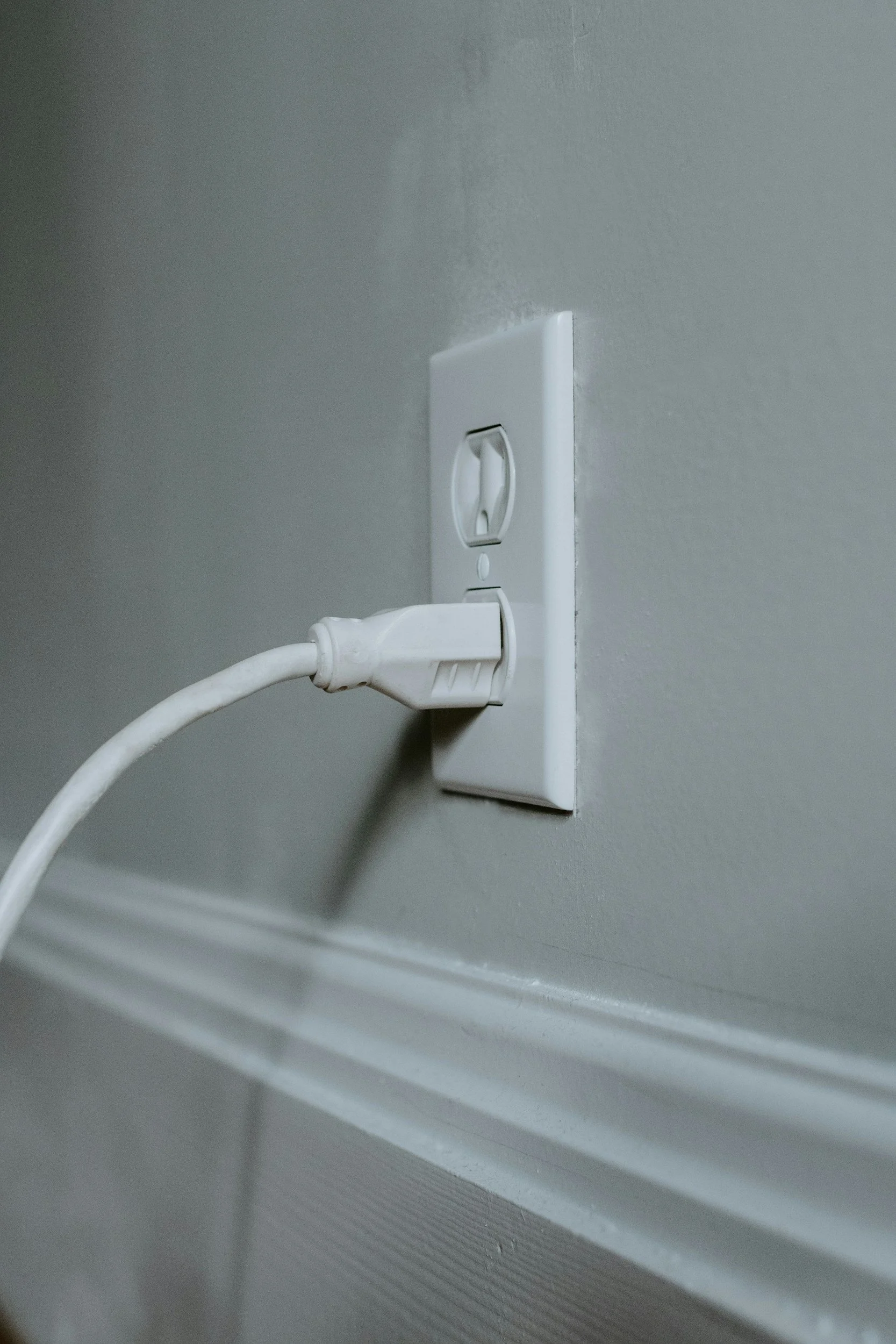
Plug into the present moment to feel more grounded.
Body-based grounding techniques work by bringing attention to physical sensation directly, rather than through the senses. These tend to be especially useful when anxiety is showing up as physical tension, restlessness, or that floaty, disconnected feeling that can accompany freeze.
Feeling Your Feet on the Floor
This one is super simple, which is part of why people underestimate it. Press your feet firmly and deliberately into the floor, like you could push through to the earth beneath the floor. Notice the pressure, the weight, the solidity of the surface beneath you. If you can take your shoes off and feel the floor directly, even better. This practice interrupts anxiety by providing the nervous system with clear information about where your body is in space, which helps counteract the drifting, untethered quality that anxiety can produce.
Orienting to the Room
This technique comes from the work of Peter Levine, who developed Somatic Experiencing. It involves slowly and deliberately looking around the room you're in, letting your gaze rest on different objects, noticing color, shape, texture, light. The key is to do this slowly, and make sure you are moving your head and neck (not just your eyes). You're not scanning for threats; you're registering that the environment is safe. This slow, deliberate orienting sends a signal to the survival brain: "I looked. There is no fire. We are okay." Animals do this instinctively after a frightening experience. Humans have mostly stopped doing it, which is one of the reasons our nervous systems can stay activated longer than they need to.
Progressive Muscle Relaxation
This technique involves systematically tensing and releasing different muscle groups in the body. You might start with your hands, squeezing them tightly for a few seconds and then fully releasing, and work your way through the arms, shoulders, face, stomach, legs, and feet. The deliberate tension-and-release cycle helps the nervous system discharge some of the physical activation that comes with anxiety, and the contrast between tension and release makes it easier to notice and inhabit the relaxed state. For people who carry a lot of chronic muscle tension, this practice can be really helpful. Get deeper guidance on this exercise in this older blog post on embodied mindfulness skills.
how is grounding different than distraction?
Good question! Distraction involves pulling your attention away from anxiety and toward something unrelated: scrolling your phone, watching TV, immersing yourself in work. It can provide temporary relief, and temporary relief is sometimes what's needed. But distraction doesn't address what the nervous system is doing. It's more like turning the volume down on the fire alarm while the underlying activation continues.
Grounding, done well, is not about escaping the anxiety. It's about returning to the present moment with the anxiety, letting the body settle into a here-and-now experience that is more tolerable than the mental story anxiety is telling. The goal isn't to avoid feeling the anxiety. It's to stop adding fuel to the fire by staying stuck in the thoughts that sustain it.
This distinction matters for how you practice grounding. If you're using a technique frantically, desperate to make the anxiety stop, it will be less effective than if you can approach it with even a small amount of curiosity and gentleness. I know that's easier to say than to do in the middle of a spike. But it's worth working toward.
can grounding help with chronic, low-level anxiety?
Yes, and this is actually where consistent grounding practice can have some of its biggest effects. Most people think of grounding as a crisis tool; something you reach for when anxiety is high. And it is useful there. But for people with chronic, background anxiety, the kind that hums along at a low level all the time, regular grounding practice throughout the day can gradually help shift the nervous system's baseline.
Think of it as giving the nervous system repeated, small experiences of settling. Each time you pause and feel your feet on the floor, or take a deliberate look around the room, or spend two minutes attending to physical sensation without judgment, you are teaching your nervous system something. You're teaching it that it is safe to come down from alert. That the present moment, right now, does not require vigilance. Over time, with repetition, that lesson starts to stick. Your brain and nervous system get the hint and start building pathways that support this more settled way of being.
This is slow work. It's not dramatic. But for people who have lived for years with a nervous system running in a higher-alert mode, these accumulated small moments of settling can produce real, lasting change.
how do i start practicing grounding?
Start small and specific. Pick one technique from this post (seriously, just one) and try it once a day for a week, ideally not in the middle of an anxiety spike. Practice when things are relatively calm so that the technique becomes familiar before you need it in a harder moment. Set a reminder on your phone if that helps, or a post-it note where you will see it. Thirty seconds of deliberate foot-pressing or slow room-orienting in the middle of an ordinary afternoon is a perfectly legit grounding practice.
Notice what happens in your body when you do it, with as much curiosity and as little judgment as you can manage. You're not looking for a dramatic result. You're looking to get to know your nervous system a little better, to start building a relationship with it based on something other than dread.
If you find that some techniques feel immediately helpful and others fall flat, that's completely normal. Different nervous systems respond differently. The goal is to find one or two approaches that work for you and build from there.
Try it for yourself
Grounding techniques for anxiety aren't magic, and they aren't a cure. But they are real, evidence-informed tools that work at the level of the nervous system. For a lot of people with anxiety, that is exactly the level where real help is needed. When practiced with some consistency and understanding, grounding can become one of the most reliable items in your anxiety management toolbox.
working with a maryland therapist who takes the body seriously
My approach to anxiety therapy has always been integrative. That means I don't plant a flag in any single method and stay there. I use CBT, mindfulness-based approaches, somatic and embodied healing practices, and clinical hypnotherapy because different people need different things, and most people need a combination. The body and the mind are not separate problems. They need to be worked on together.
If what I've described here resonates, and you're someone who has been trying hard to think your way out of anxiety without quite getting there, I'd love to talk. I offer a free 15-minute consultation call so we can see whether working together would be a good fit.
Sessions are available in person in my College Park, Maryland office, or online anywhere in Maryland. Contact me here, or call (301) 818-3978.
About the author, An ANXIETY COUNSELOR in college park, MD:
Beth Charbonneau, LCSW-C, is a Maryland therapist, specializing in anxiety therapy and treatment. With over 20 years of experience, she brings a holistic approach to calming the mind and body, and encourages her clients to feel empowered to find more joy in life. More information about her practice can be found on her website.
