The Second Arrow: How You’re Making Your Anxiety Worse (And It’s Not Your Fault)

Some suffering is inevitable. Can we cut down on the suffering that’s avoidable?
You’re already dealing with anxiety. The tight chest, the racing thoughts, the low-grade dread that follows you around like an unwanted houseguest. That’s hard enough on its own.
But here’s what I see in my work as a Maryland anxiety therapist almost every single day: people aren’t just suffering from anxiety. They’re also suffering from their reaction to anxiety. The judgment, the shame, the “why am I like this,” the “I should be over this by now”, all layered on top of the original pain like a second wound. Literally, insult upon injury.
Buddhist psychology has a name for this. It’s called the second arrow.
But what’s The First Arrow?
The teaching comes from an old Buddhist teaching story. The Buddha asked his students, “If you were struck by an arrow, would it hurt?” Obviously, yes. It would hurt a lot.
Now, what if you were struck by a second arrow, in the exact same spot?
The first arrow represents the pain of life. All the difficult feelings, the hard circumstances, the things that happen to us that we didn’t choose and can’t fully control. Anxiety, grief, fear, disappointment. These are the first arrows. They are, as the Buddha taught through the First Noble Truth, part of being human. You don’t get to opt out. Nobody does.
The second arrow is what we do to ourselves about the first arrow.
It’s the self-criticism, the shame spiral, the catastrophizing about the catastrophe. It’s the anxious rumination about why you’re so anxious. It’s the panicking about the panic attack. It’s “I’m broken” layered on top of “I’m scared.” The spiraling about the spiraling. Here’s the key point: the first arrow is often unavoidable. The second arrow almost always is avoidable. So, your choice is one arrow or two. Seems like one would be the better answer, but somehow we end up picking two, way more often than would seem sensible.
What the second arrow looks like with anxiety
In my work with anxious clients in College Park and online throughout Maryland, the second arrows come in remarkably consistent shapes. See if any of these sound familiar:
You have a moment of anxiety. Maybe your heart rate spikes before a presentation, or you wake at 3am with your brain already running. And then immediately, the second arrows start flying:
“I’m so anxious, what is wrong with me?”
“Normal people don’t feel this way. Why can’t I get my shit together?!?”
“I’ve been working on this for years and I’m still like this. I’m never going to get better.”
“I can’t handle this.”
“This is going to ruin everything.”
Each of those thoughts is a second arrow. They take a hard moment and turn it into a catastrophe. They take anxiety and add suffering on top.
And here’s what makes it even more complicated: a lot of second arrows are disguised as helpful. The self-criticism feels like motivation. The shame feels like appropriate accountability. The “I should be over this” feels like a reasonable expectation. But in practice, none of these actually reduce anxiety. They amplify it. Thanks, brain, super helpful.
Why we do it anyways
This is a good place to pause and acknowledge something important. Shooting second arrows is not a character flaw. It’s an extremely human thing to do.
Part of what drives it is the meta-anxiety dynamic I talked about in the overview post about Buddhist psychology concepts for anxiety. It’s the anxiety about having anxiety, the belief that you are uniquely broken for struggling. We are culturally conditioned to believe that suffering is a sign of weakness, that if you were doing life right, you’d feel better. Buddhist psychology pushes back on this hard. The First Noble Truth, which says that dukkha (suffering, unsatisfactoriness) is a universal part of human experience, is essentially one long argument against the second arrow. You’re not doing life wrong. You’re doing life.
Another piece of it is that our brains are genuinely trying to help (in a counterproductive, kind of panicked way). Self-criticism, in evolutionary terms, is an attempt to course-correct, to signal to yourself that something is wrong so you’ll fix it. The problem is that anxiety isn’t usually something you can self-criticize your way out of. (If harsh self-judgment fixed anxiety, it would have worked by now.) The brain’s threat-detection system, already running hot, interprets the second arrow as more evidence of danger. Which creates more anxiety. Which invites more second arrows. You see where this is going.
Noticing the SEcond Arrow: The first Step
You can’t stop shooting second arrows you don’t notice. So the first and most important skill here is developing awareness of when the second arrow has landed.
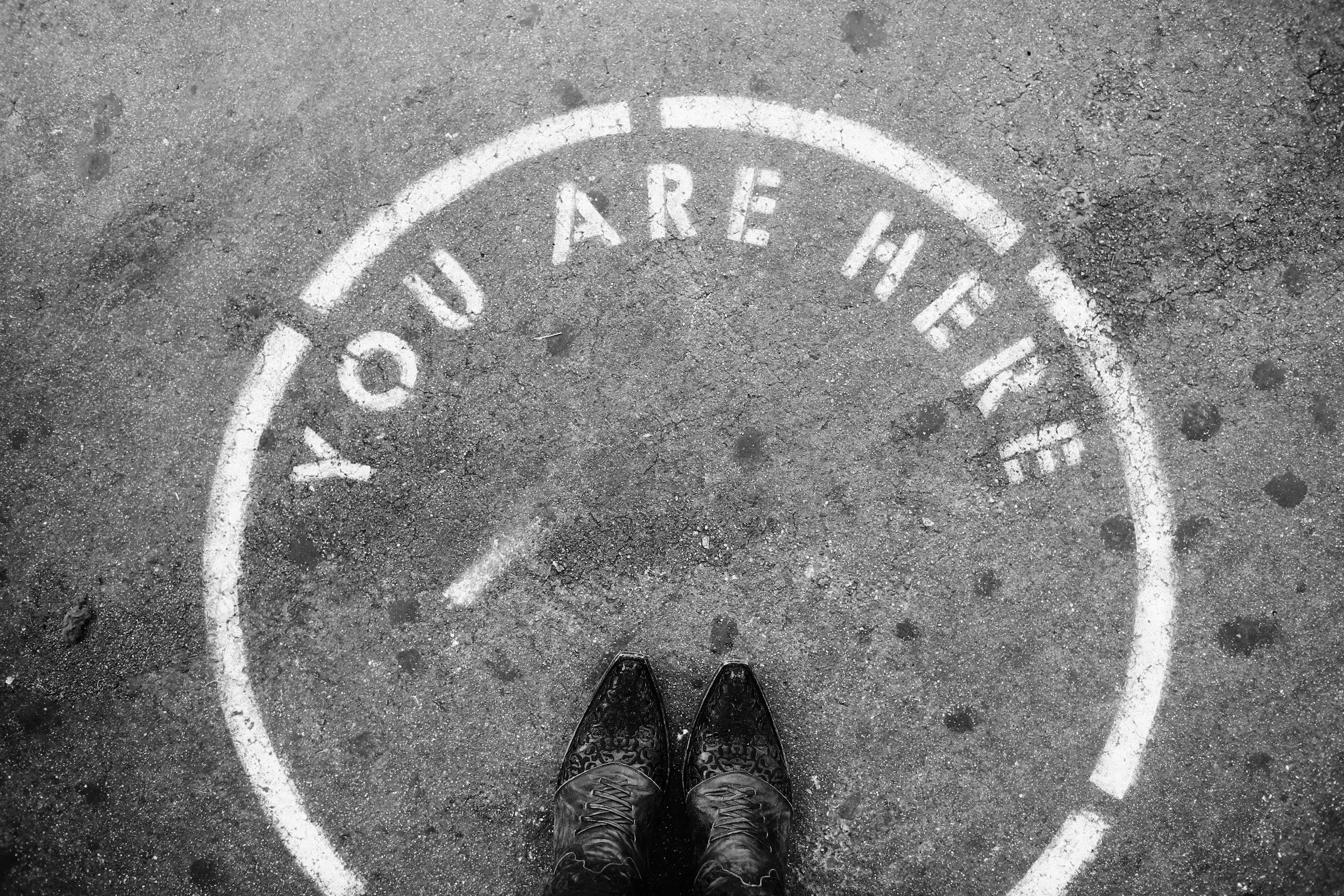
Step one: Get yourself and your awareness in the same place.
This is a mindfulness practice, and it connects directly to what I described in the overview post about sati, or mindful awareness. The goal isn’t to become someone who never has harsh internal reactions. Again, that’s human, and trying to eliminate it entirely is just another second arrow. The goal is to create a little space between the first arrow (the anxiety) and the second one, so you can recognize what’s happening.
Some things to watch for:
“Should” and “shouldn’t” language about your feelings. “I shouldn’t still be anxious.” “I should be able to handle this.” These are second arrows with a particular flavor. They’re arguing with reality, insisting that your experience should be different from what it actually is.
Comparison to some imagined other person who definitely handles this better than you. Spoiler: that person is fictional.
Catastrophizing about the anxiety itself. This is where the second arrow gets especially sneaky. Not only are you anxious, but now you’re anxious that you’re anxious, and maybe you’ll always be anxious, and this is clearly a sign that you’re fundamentally not okay.
Self-labeling. “I’m an anxious person.” “I’m broken.” “I’m weak.” These take a present-moment experience and turn it into a permanent identity. This connects to the concept of anatta (non-self) that we talked about an earlier post. You are not your anxious thoughts, and an anxious moment is not the whole story of who you are.
Some of you who have been around the block a time or two with anxiety treatment may recognize some of these kinds of distorted thought patterns from Cognitive Behavioral Therapy. I had a terrific meditation teacher once say, “All wisdom is plagiarized”, in recognition of the fact that good ideas come up again and again, in different packages. Which, in my mind, is great. Because sometimes, that new way of hearing it hits you differently. Or, as my father would often say (with a good-natured shake of his head) when I acted like I learned a new and amazing thing out in the world that he had been trying to teach me for ages, “Sometimes you gotta hear it from a different messenger”. CBT and mindfulness (and Buddhist psychology concepts) can all fit together well. So, if there’s an idea that’s helpful to you, it doesn’t really matter what you call it.
What to do instead: Pulling out the second arrow
Noticing the second arrow doesn’t automatically make it stop hurting. But it opens the door to a different response.
Here’s a small but genuinely transformative practice to experiment with. When you catch a second arrow, try naming it. Not to judge it (that’s just a third arrow), but to simply recognize it for what it is.
“Ah. There’s the self-criticism.”
“That’s a second arrow.”
“I’m having a harsh thought about my anxiety right now.”
This is deceptively simple and also genuinely hard. It requires the same kind of non-judgmental, curious attention that I described when we talked about mindfulness. You’re not trying to fix the thought or argue yourself out of it. You’re just noticing it. Naming it. Giving it a little breathing room.
From there, you might also try asking: what would I say to a good friend who was feeling this way? This is where the metta (lovingkindness) and self-compassion practice connects to the second arrow. Most of us are considerably gentler with the people we care about than we are with ourselves. The capacity for that kindness is already in there. The question is whether we can direct even a little of it inward.
You’re not trying to talk yourself out of the anxiety. You’re not pretending everything is fine. You’re just refusing to add the second wound by putting your own arrows down. If you want to go down a rabbit hole with me about how the broken systems in our society gaslight us into trying to shoot arrows at ourselves, feel free to jump over to this older blog post that I wrote when I was incandescently mad about it all. Or, skip the rage and just read on. Choose your own adventure.

This isn’t easy work. But, as the saying goes, “No mud. No lotus.”
A Little Warning
I want to be up front with you. Pulling out the second arrow is not a quick fix, and noticing it doesn’t immediately make it stop hurting. Some second arrows have been flying so fast and automatically for so long that they feel like just the way things are, like your own internal voice rather than a pattern that can change.
That’s exactly the kind of work that therapy can help with. Because it’s one thing to understand this concept intellectually, and another to actually develop the skill of catching second arrows in the moment , when you’re already activated, already in the middle of a hard feeling, and the self-criticism comes up before you even know it’s happening.
The first step is just knowing the second arrow exists. Which, if you’ve read this far, you do. Yay, you!
Stay tuned for additional posts in this series about Buddhist psychology concepts that can help with anxiety. Next up: How the understanding of impermanence can help with panic attacks. Other posts include concepts of metta and equanimity.
ready to work with a maryland anxiety therapist?
I offer specialized anxiety therapy in College Park, MD, and online throughout Maryland. My approach is warm but direct, practical, and integrates both evidence-based Western therapies and mindfulness-based approaches (including the Buddhist psychological concepts we’ve been exploring here, if you’re down for that). If you’re curious about whether therapy might help you find a different relationship with anxiety, I’d love to connect. You can contact me to set up a free 15-minute consultation call to see if we’d be a good fit to work together.
Other services I offer include hypnotherapy, mindfulness-based therapy, life coaching, and support for LGBTQIA+ clients. Additional information is available on my home page.
About the author:
Beth Charbonneau, LCSW-C, is a Maryland therapist, specializing in anxiety therapy and treatment. With over 20 years of experience, she brings a holistic approach to calming the mind and body, and encourages her clients to feel empowered to find more joy in life. More information about her practice can be found on her website.
